Luckster payment methods UK: what the old cashier supported
 Available in GB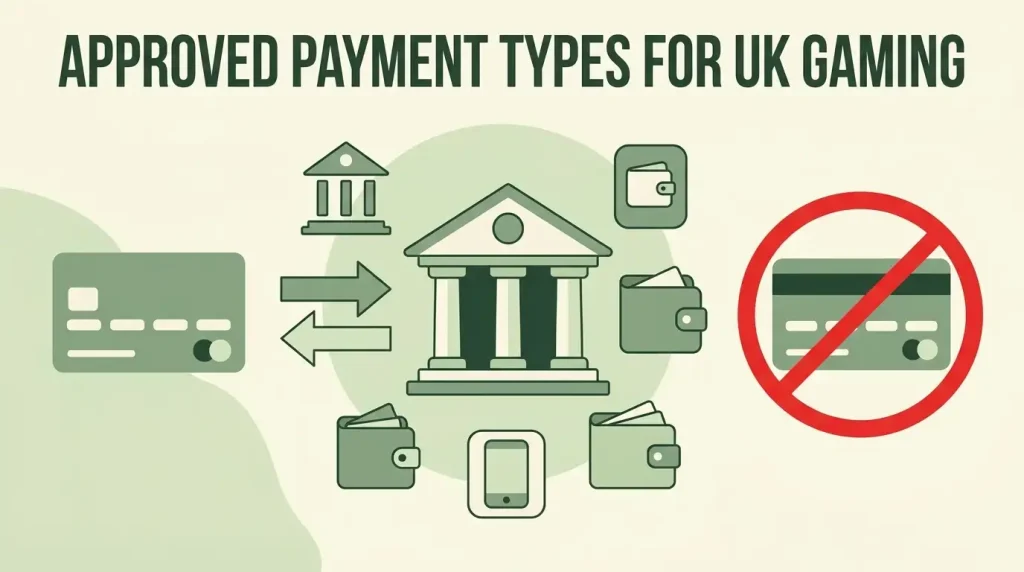
Historical UK review sources consistently listed Visa and Mastercard debit cards, PayPal, Trustly, MuchBetter, Skrill, Paysafecard and bank transfer among Luckster’s payment options. Those methods describe the former cashier, not a verified cashier operating today. The UK Gambling Commission currently lists www.luckster.com as Inactive.
For a British reader, the current rule that matters most is independent of Luckster: UK-licensed remote casinos cannot accept credit-card funded gambling payments, including routes through e-wallets that allow credit-card money to reach a gambling account. That rule remains relevant even though Luckster’s present cashier cannot be verified.
Table of Contents
- Luckster's former UK cashier covered cards, e-wallets and bank-based options
- Credit cards cannot fund UK-licensed online casino gambling
- Debit cards dominate remote gambling deposits, but that is not a Luckster cashier claim
- A method listed for deposits is not automatically a withdrawal method
- A future cashier should be checked for payment ownership and exact routing
- Three different questions need three different answers
- Historical minimums and payout times need more caution than method names
- Accepted banking does not automatically mean bonus eligibility
- Banking should be checked alongside account status and promotion terms
- How UK payment rules change the way old Luckster banking lists should be read
Luckster’s former UK cashier covered cards, e-wallets and bank-based options
Two independent casino review sources overlap on the main Luckster payment methods. FIRST.com and NewCasinos both recorded debit cards, PayPal, Trustly, MuchBetter, Skrill, Paysafecard and bank transfer for the brand. Because the regulator now marks the Luckster domain inactive, the correct way to use that information is as a historical snapshot.
| Historically listed method | Payment type | How to read it now |
|---|---|---|
| Visa / Mastercard debit | Debit card | Documented historically. This does not prove a current Luckster card deposit route. |
| PayPal | E-wallet | Documented historically. Any future availability would need a live cashier check. |
| Trustly | Bank payment service | Documented historically, not verified as a current Luckster option. |
| MuchBetter and Skrill | E-wallets | Both appear in historical payment records, but old listings are not current acceptance evidence. |
| Paysafecard | Prepaid voucher | Historically listed for deposits; do not assume it can be used for a current withdrawal. |
| Bank transfer | Bank rail | Historically listed for UK users. Current routing, limits and timing are unverified. |
Old minimums, fees and processing times are omitted because those values are more sensitive to change than broad method categories and belong in a current cashier check, not in a recycled historical table.
Credit cards cannot fund UK-licensed online casino gambling
The Gambling Commission’s credit-card ban applies to online betting, casino and bingo in Great Britain. Operators must not accept credit-card payments for gambling, and they must also make sure an e-wallet or other money service business cannot be used to route credit-card funds into a gambling account.
This is why an old casino review that simply says “Visa” or “Mastercard” needs context. For a current UK-facing casino, the relevant card route is debit, not credit. The rule is market-wide and does not depend on whether Luckster itself is active.
Debit cards dominate remote gambling deposits, but that is not a Luckster cashier claim
The Gambling Commission has reported that the vast majority of remote gambling deposits are made by debit cards. It also discusses major e-wallet and e-money providers in the context of enforcing the credit-card ban. That gives useful Great Britain context for how online gambling accounts are commonly funded.
Market preference and brand availability are different facts. A payment method can be common across British gambling sites without being supported by every operator. Equally, a method that Luckster listed historically may disappear after a platform migration, commercial change or relaunch. National payment behaviour therefore should not be converted into a claim about today’s Luckster cashier.
What is common across the UK market
Debit cards are the dominant remote-deposit route in Great Britain, and compliant e-wallets are also widely used.
What is documented specifically for Luckster
Luckster historically listed several debit, wallet and bank options, but no current cashier is verified while the domain is inactive.
A method listed for deposits is not automatically a withdrawal method
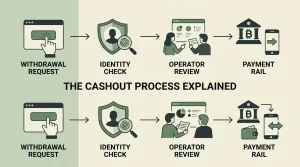
Casino payment tables often flatten two different questions into one list. A deposit method is a route for adding money to an account. A withdrawal method is a route the operator permits for returning funds. Some payment products support both directions, while others can be deposit-only or depend on account and provider rules.
Paysafecard is a useful historical example because review tables commonly presented it as a deposit option rather than a general cashout route. The practical lesson is broader than one product: never infer withdrawal availability from the presence of a deposit logo.
Cashout-specific uncertainty, including why old processing-time tables should not be treated as current, is covered separately on the Luckster withdrawals page.
A future cashier should be checked for payment ownership and exact routing
If Luckster returns to the British market, a useful cashier audit should do more than count logos. Start with the exact official domain and confirm that it is active in the UK Gambling Commission register. Then inspect the payment methods presented to a logged-in UK account and distinguish deposit rails from withdrawal rails.
- Confirm the domain. Do not assume a search result or lookalike site is the regulated Luckster service.
- Check the payment holder. The card, bank account or e-wallet normally needs to belong to the player whose gambling account is being funded.
- Separate deposits from withdrawals. Record which routes work in each direction rather than copying one combined logo strip.
- Read the live cashier for limits and fees. Historical minimums and processing times are not reliable enough for a current claim.
- Check promotion exclusions separately. A payment method can be accepted for a deposit while still being excluded from a specific bonus.
The Luckster UK status page explains why that first domain check is essential before any current banking statement is published.
Three different questions need three different answers
What did Luckster support?
Historical reviews document debit cards, several e-wallets, Trustly, Paysafecard and bank transfer.
What is common in Britain?
Debit cards dominate remote gambling deposits at market level, with e-wallets also widely used.
What is allowed now?
Credit-card funded gambling payments are prohibited for UK-licensed online casino gambling.
What works at Luckster today?
That cannot be confirmed from a live official cashier while the UKGC-listed Luckster domain remains inactive.
Historical minimums and payout times need more caution than method names
A broad payment category can remain recognisable for years, but the commercial details attached to it can change much faster. Minimum deposits, minimum withdrawals, processing windows, fees and provider availability can all be revised without changing the casino’s overall banking strategy. That is why this page preserves the historical method mix but does not recycle exact old cashier numbers as if they were still operational.
The same principle applies when two old reviews agree. Agreement is useful for establishing that a method was part of the former product, but it does not freeze the terms that applied to that method. A historical PayPal listing, for example, supports the statement that PayPal was offered at that time. It does not establish a current PayPal limit, a current payout speed or even current PayPal availability.
For readers comparing archived casino pages, this distinction avoids a common error: treating a detailed old table as more trustworthy simply because it contains more numbers. Extra precision is only useful when the underlying data is current. When the domain itself is inactive in the regulator register, method categories are the durable part of the evidence and exact operational figures are the part most likely to mislead.
Accepted banking does not automatically mean bonus eligibility
A payment rail can be acceptable for ordinary account funding and still be treated differently under a promotion. That is a separate question from whether the method is technically accepted by the cashier. Historical casino reviews often compress both topics into a single payments section, which can make an old banking list look more complete than it really is for a bonus decision.
If a future Luckster promotion appears, the safer sequence is to verify the promotion terms and cashier independently. First establish that the offer belongs to the exact regulated domain. Then read the eligibility rules for excluded payment methods, wagering, expiry and any other restrictions. Only after that should the payment option be treated as compatible with the offer. The current Luckster bonus status page explains why old promotional pages should not be used as proof of a live UK incentive.
This also prevents a reverse inference. Seeing a historically listed e-wallet does not prove that a current bonus accepts it, and seeing a current UK payment rule does not prove that Luckster has relaunched a cashier. Payment acceptance, promotion eligibility and brand availability are three separate checks.
Banking should be checked alongside account status and promotion terms
Payments do not sit in isolation. A current deposit method only matters if the account can legitimately be opened or used, and a payment route can affect how a promotion is credited or excluded. That is why old cashier images should never be used as a shortcut for the rest of the account checks.
For the broader account flow, including registration and verification context, see Luckster account and KYC. For historical promotional claims and why current-looking offer pages can be misleading, the Luckster bonus status should be checked separately. The full Luckster review ties these separate questions back to the current UK availability evidence.
How UK payment rules change the way old Luckster banking lists should be read
The old Luckster cashier was broad enough to include debit cards, e-wallets, Trustly, Paysafecard and bank transfer, but that history should not be presented as a live 2026 payment menu. Current British rules add an important boundary: credit-card funded online casino gambling is prohibited, including through payment intermediaries that would let credit money reach a gambling account. The practical reading is therefore two-layered – use the historical list to understand what Luckster once supported, and require a fresh official cashier plus an active regulator-listed domain before making any present-tense banking claim.