Luckster account, registration and KYC for UK players
 Available in GB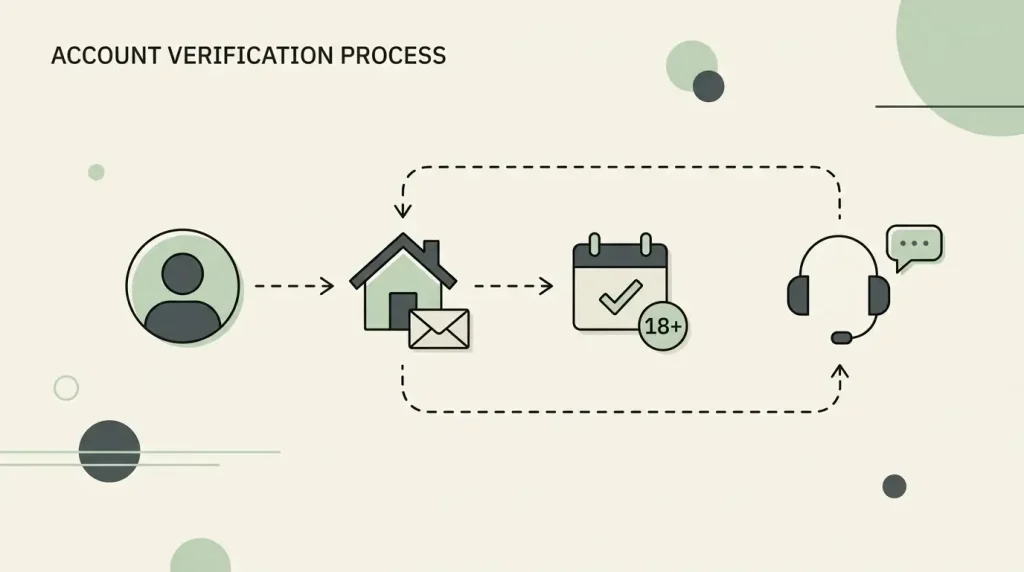
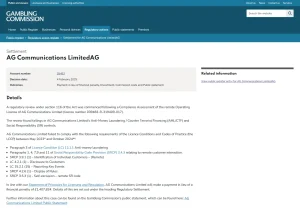
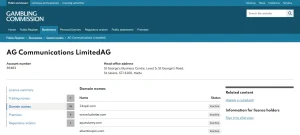
There is no safe basis for publishing current Luckster sign-up steps. The UK Gambling Commission currently lists www.luckster.com as Inactive under AG Communications Limited, so an old registration flow, login screen or support address should not be treated as live. What can be stated confidently is the Great Britain regulatory baseline: a remote licensee must establish a customer’s identity before allowing gambling and must verify, at minimum, the customer’s name, address and date of birth.
That regulator-level rule is not the same thing as a Luckster-specific document checklist. A current official Luckster page setting out present-day KYC documents, verification times or account-opening steps is not verified. The relevant distinction is between rules that apply to a properly licensed Great Britain remote casino and historical Luckster details, with any future Luckster-branded service requiring a fresh domain and account check.
Table of Contents
- Why there are no current Luckster registration instructions here
- What a licensed remote casino must verify before gambling
- Why passports, bank statements and verification times are not listed as current Luckster facts
- What older Luckster account and support information can still tell us
- How GAMSTOP fits into the account picture
- A safer checklist before using any future Luckster-branded account page
- Red flags when a page asks for Luckster login or KYC details
- What verification rules mean if Luckster registration ever returns
- Account information and verification expectations
Why there are no current Luckster registration instructions here
The strongest current brand-specific signal is the Gambling Commission’s domain record for AG Communications Limited. That record lists www.luckster.com as inactive. The company still has active remote casino and betting licence activities, but the company-level permission does not turn every historical domain into an active website.
That is why the first account check is not “where is the register button?” It is “is this exact domain currently shown as active in the regulator’s register?” If the answer is no, images from old reviews, cached login pages and familiar branding are not enough to justify uploading identity documents or attempting a deposit.
For the brand-level evidence, see the Luckster UK status page. The wider operator context is covered separately in our Luckster trust and UKGC record.
What a licensed remote casino must verify before gambling
The Gambling Commission’s customer identity condition applies across remote licences in scope. Before a customer is permitted to gamble, the licensee must obtain and verify information establishing that customer’s identity. The minimum listed data points are name, address and date of birth. Operators must also take reasonable steps to keep identity information accurate.
The same condition matters at the withdrawal stage. A request to withdraw should not suddenly trigger a demand for additional information if that information could reasonably have been requested earlier. This does not remove other legal duties, such as anti-money-laundering checks when a genuine need arises, but it prevents a routine cashout request from being used as the first opportunity to ask for information that should already have been collected.
| Requirement | What the regulator says | What this means for Luckster information |
|---|---|---|
| Identity before gambling | Name, address and date of birth must be verified before the customer can gamble. | A future active Luckster service would need an identity process, but the exact workflow cannot be reconstructed from an inactive historical site. |
| Document expectations | Customers should be told before depositing what identity documents or other information might be needed and when. | Do not rely on an old third-party Luckster checklist as if it were a current official requirement. |
| Withdrawals | Information that could reasonably have been requested earlier should not first be demanded simply because the customer asks to withdraw. | Cashout-specific detail belongs on our Luckster withdrawal guidance page rather than being turned into a generic KYC promise here. |
The current rule is available in the Gambling Commission’s customer identity verification condition. It is useful precisely because it tells us what is universal at the regulatory level and what still depends on the operator. For the cashout-specific context, see Luckster withdrawals.
Why passports, bank statements and verification times are not listed as current Luckster facts
Many online casinos use photo ID, proof of address or additional source-of-funds information in some circumstances, but the exact documents requested can depend on the operator, the verification method and the customer’s risk profile. That makes a brand-specific list a high-risk fact when the current official terms cannot be checked.
For Luckster, the safe distinction is simple. The Great Britain requirement to establish identity is current and regulator-backed. A claim such as “Luckster always asks for document X” or “Luckster verifies accounts within Y hours” would need a current official Luckster source. No such current source is verified, so those details should not be treated as established facts.
What older Luckster account and support information can still tell us
Historical Luckster reviews recorded email support at [email protected] and live chat, with published chat availability during daytime and evening hours. Those details help document how the former service operated, but they do not establish that the mailbox or chat is staffed today. Sending identity documents to an address merely because it appeared in an old review would be poor account security.
Historical material also described account-control tools such as deposit limits, time or play limits, reality checks, cool-off options and self-exclusion. Again, these are useful for reconstructing the older product but not for proving which controls currently exist behind an inactive domain.
If Luckster ever returns, support should be verified inside the exact active domain rather than copied from a historical article. The same applies to mobile account access: our Luckster app and mobile page explains why old app references are not a current download route. Banking history is kept on the Luckster payment methods page so that account verification and payment-method claims do not get mixed together.
How GAMSTOP fits into the account picture
GAMSTOP is the national online self-exclusion scheme used across gambling businesses licensed in Great Britain. The Gambling Commission states that registering with GAMSTOP prevents use of online gambling websites and apps run by Great Britain-licensed businesses for the selected exclusion period. Remote licensees also have their own self-exclusion duties.
This is not a Luckster-specific feature that can be “worked around”. It is part of the wider licensed-market framework. If a future Luckster-branded service claimed to be licensed for Great Britain, its account journey would have to sit within those obligations. The current inactive Luckster domain should not be used as a route around any existing self-exclusion.
The Commission’s current overview is available on its multi-operator self-exclusion page. For the broader rule changes affecting accounts in 2026, see our current Great Britain rules guide.
A safer checklist before using any future Luckster-branded account page
- Match the exact hostname. Search the Gambling Commission register for the precise domain you are viewing. A similar brand name or alternative domain is not enough.
- Confirm that the domain is active under the relevant licensee. An active company licence and an inactive domain are different records. Check both.
- Read the current privacy and verification information before sending documents. A legitimate service should explain what information may be requested and how it will be handled.
- Verify support inside the active service. Do not send identity documents to an address copied from an old review, forum post or cached page.
- Check current payment and withdrawal terms separately. Account verification does not prove that old payment methods, limits or processing times remain valid.
- Keep safer-gambling controls intact. Do not use a relaunch, mirror or lookalike site to evade self-exclusion or account restrictions.
This process is intentionally slower than following a search result straight to a registration form. That is the point. When a brand has an inactive historical domain, domain verification is part of account security. For the wider brand picture, return to the full Luckster review.
Red flags when a page asks for Luckster login or KYC details
The domain is not an exact regulator match
A similar name, extra word, unusual subdomain or different top-level domain deserves a fresh register check before any personal data is entered.
The page asks for documents before explaining why
A current licensed service should explain the identity process and the circumstances in which more information may be required.
Support details exist only on third-party pages
Old support addresses can persist online for years. Confirm them inside the verified official service before sending sensitive material.
The page promises a frictionless cashout with no checks
Identity and other legal checks are normal in regulated gambling. A promise to bypass them is not evidence of a safer or more legitimate account.
What verification rules mean if Luckster registration ever returns
If Luckster returns to Great Britain, the first meaningful change will not be a new welcome page. It will be a verifiable active domain tied to the correct Gambling Commission record. After that, the account journey should verify identity before gambling, explain possible document requirements before deposits, and provide support details inside the verified service. Until those conditions can be checked, old registration instructions, KYC lists and support contacts should stay in the historical column rather than being presented as current account guidance.
Account information and verification expectations
Casino accounts normally connect several parts of the user journey, including registration details, identity checks, account security and access management. Each of these areas has its own purpose. Registration creates the user profile, while verification procedures help confirm that account activity follows the applicable rules.
When historical account information is reviewed, it is important to distinguish between general registration practices and details that describe a currently available service. Older instructions may explain how an account was previously handled, but they should not be treated as active sign-up guidance without confirmation.